National Swine Testing Center
Grant Number: U42OD035738
Research Emphasis/Objectives
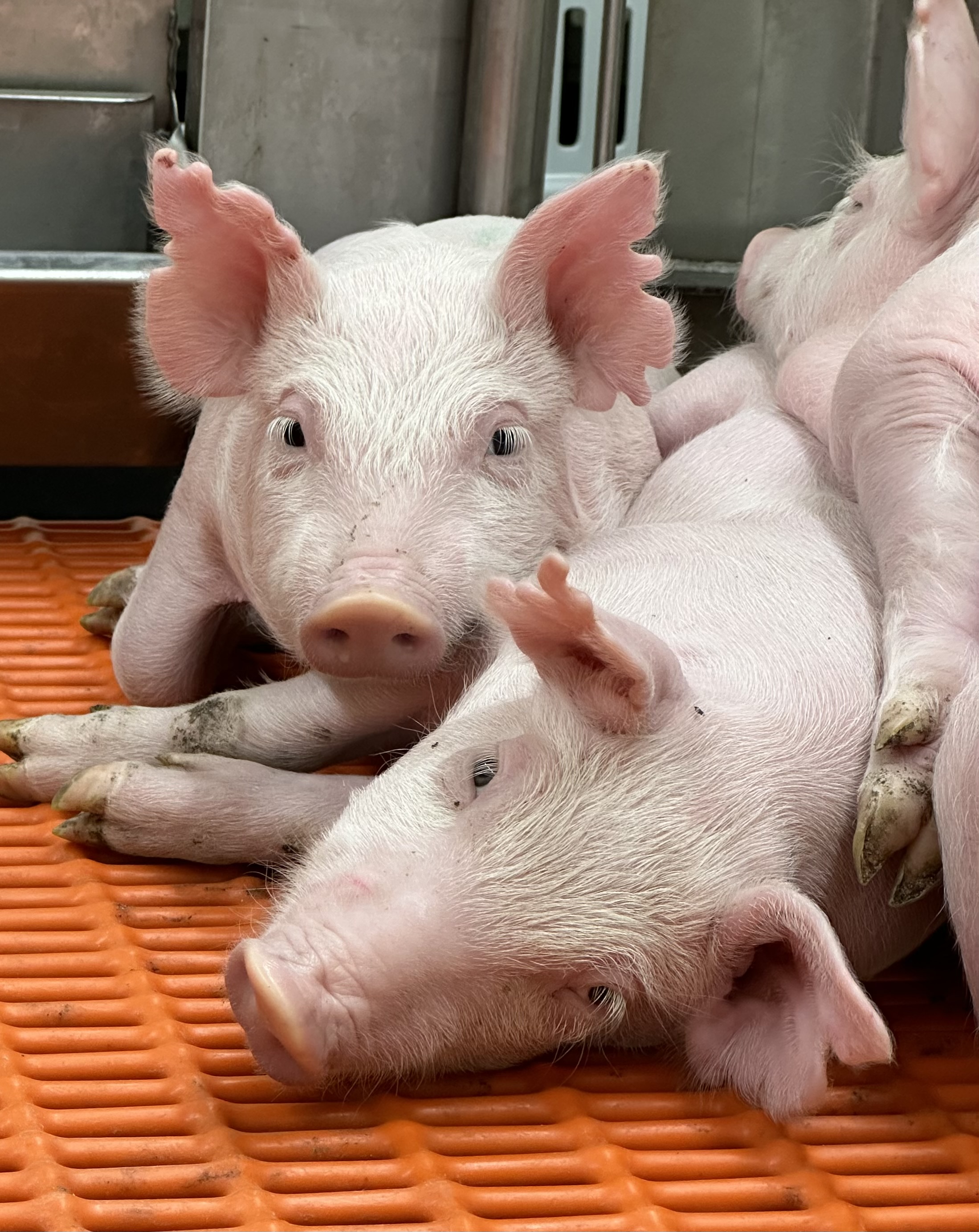
The National Swine Testing Center (NSTC) serves as a resource for evaluating the safety and targeting efficiency of emerging technologies and delivery reagents. Additionally, the Center works to generate critically needed swine models for human disease.
Opportunities for collaborative research are available to investigators across disciplines nationwide. The NSTC provides infrastructure and expertise in support of genome editing projects involving basic research or translational preclinical research.
Current Research
Research efforts focus on improving delivery efficiency of reagents and optimizing novel delivery techniques to target tissues in swine models.
Services Provided
- Study Development and Design: Work with investigators to perform pilot studies, when needed, and aid in designing projects that provide statistical power in sufficient animal number and sex distribution.
- Biological Materials: Cells, tissues, and organs.
- Principal Investigator–Driven Model Creation: The center creates custom models for investigators. Requests are evaluated and prioritized by the steering committee.
- Fee-for-Service Model Creation: The center creates custom animal models for investigators on a cost-recovery basis.
- Delivery of Viral or Nonviral Editing Reagents: The NSTC team is trained and has expertise with a variety of swine-specific translational surgical procedures. The NSTC encourages collaborative efforts and training on new procedures and protocols.
- Physiological Safety Evaluations: General and project-specific immunogenicity and inflammation evaluations.
- Genome Safety Evaluations: On- and off-target editing.
Contact Information
National Swine Testing Center
University of Missouri–Animal Science Research Center
920 East Campus Drive
Columbia, MO 65211
https://nstc.missouri.edu
Principal Investigator(s)
Jonathan A. Green
University of Missouri
Animal Science Research Center
Email: [email protected]
Kevin D. Wells
University of Missouri
Animal Science Research Center
Email: [email protected]
Center Director
Jonathan A. Green
University of Missouri
Animal Science Research Center
Email: [email protected]
Additional Contact(s)
National Swine Testing Center
Email: [email protected]
- Read more about National Swine Testing Center
Log in to post comments