





University of Miami Biospecimen Repository: Transforming Precision Medicine Research
A Ten-Fold Leap in Research Storage Capacity
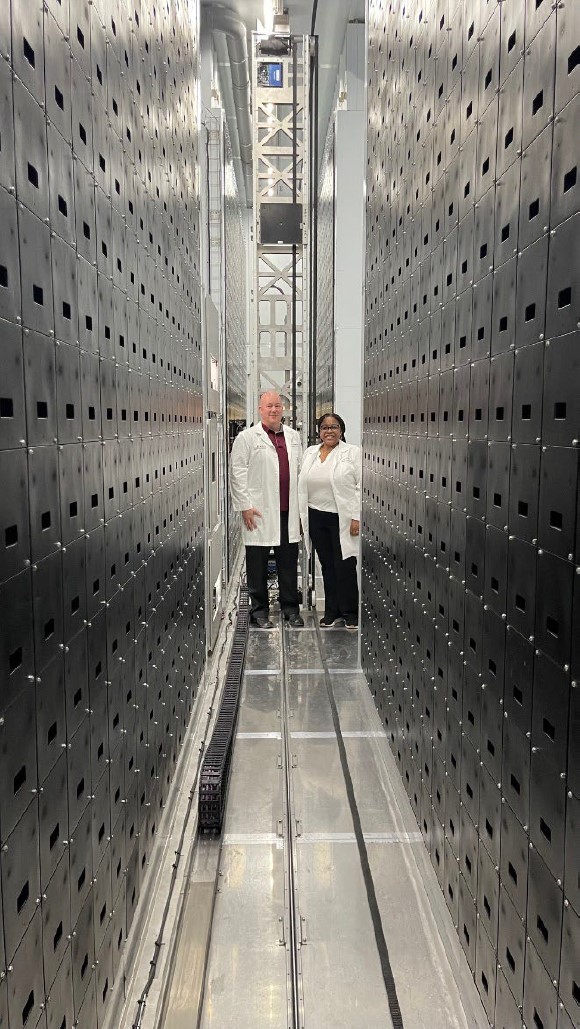
The John P. Hussman Institute for Human Genomics at the University of Miami (UM) Miller School of Medicine (MSOM) has transformed its biomedical research infrastructure with a state-of-the-art Biospecimen Facility (Figure 1) capable of storing more than 5 million specimens, substantially expanding its clinical and translational research infrastructure. Supported by a $7.6 million National Institutes of Health (NIH) construction grant (C06OD030170), this 6,500-square-foot facility represents a significant leap in the university’s ability to advance precision medicine and support global collaborative research. Dr. Jacob McCauley, Director, Center for Genome Technology & Biorepository Facility at the John P. Hussman Institute for Human Genomics, highlighted the significance of the new facility. “We’re really excited about our new venture here, to build a new facility to receive, process, and store biospecimens for biomedical research studies,” Dr. McCauley emphasized. “This new facility and the capabilities it offers position us to accelerate investigator-initiated studies, team science, and next-generation precision medicine research.”
Engineering Excellence Meets Research Impact
The Biospecimen Facility makes use of cutting-edge technologies, featuring an advanced state-of-the-art automated -80°C modular storage system designed to provide secure, high-density inventory management of biospecimens. The facility brings together some of the most advanced biomedical research technology available—including robotic sample handling, automated cryogenic storage for millions of specimens, and high-throughput proteomics platforms capable of detecting disease signals from a single drop of blood—all under one roof. It also offers dedicated clinic rooms where patients can be enrolled and samples collected in a single visit, helping to streamline the path from patient to discovery. The Biospecimen Facility is equipped with around-the-clock, continuous monitoring to maintain sample integrity. Triple-redundant backup systems provide reliability, ensuring that the samples remain secure even in the event of a power outage or mechanical failure.
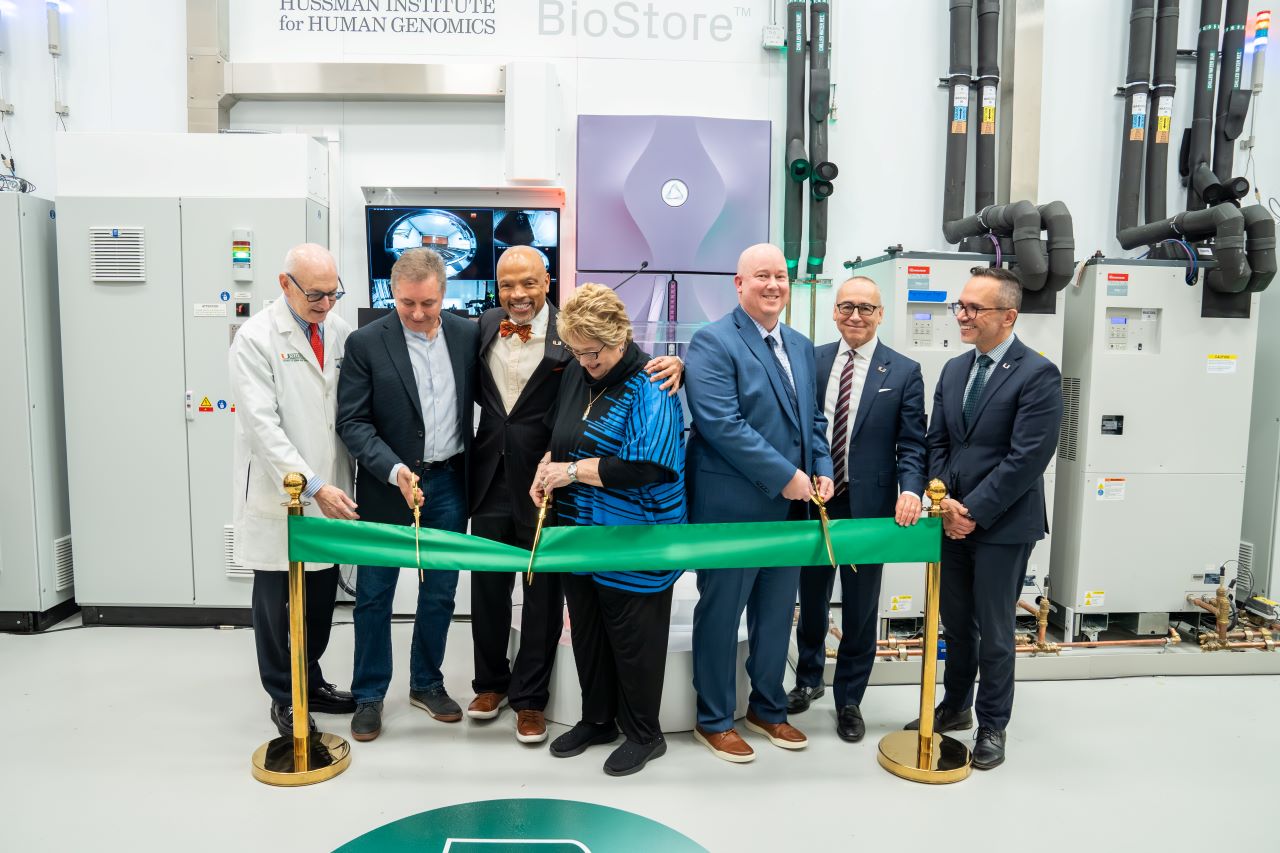
Since opening in January 2025 (Figure 2), the facility has already demonstrated remarkable impact. The Biospecimen Facility now actively maintains 1.4 million samples across 228 research studies, serving 68 principal investigators from 17 UM departments, and tens of national and international research collaboratives. These researchers are advancing critical work in various high-priority health areas, including Alzheimer’s disease,1 cancer, cardiovascular disease, neurological disorders,2 autoimmune diseases,3 and infectious diseases. The facility provides a secure platform for various types of NIH-funded research, including clinical trials, multi-site collaborations, and electronic medical record–linked biospecimen collections. “We support NIH-funded projects across almost all NIH institutes and centers,” said Dr. McCauley, including the National Institute on Aging, the National Institute of Neurological Disorders and Stroke, the National Institute of Diabetes and Digestive and Kidney Diseases, the National Eye Institute, and the National Cancer Institute.
Dr. Margaret Pericak-Vance, Director, Hussman Institute for Human Genomics, emphasized that the new biorepository has positioned the institute as a global leader in precision medicine. The facility supports the UM Precision Medicine Initiative (or UPROMISE), and many of the studies performed within the facility are aligned with NIH’s precision medicine goals. By analyzing comprehensive molecular, clinical, environmental, and lifestyle information, precision medicine allows more accurate diagnosis of disease characteristics and tailored prevention and treatment. Unlike a one-size-fits-all model, precision medicine promises more precise and effective outcomes for individuals and populations. Although the field is still maturing, the foundation being laid today through biobanks, genomic research, artificial intelligence, and real-world patient data is bringing that promise closer to reality each year. “Precision medicine is the future, and being able to have this information at our fingertips … this is monumental.” Dr. Pericak-Vance reflected. “This is really the future of modern medicine.”
Building the Future of Translational Research
Dr. McCauley remarked that the Biospecimen Facility is already catalyzing growth beyond initial expectations. Researchers are expanding from smaller- to larger-scale projects based on their confidence in the facility’s sample security and processing capabilities. Overall, the Biospecimen Facility positions UM to attract NIH funding and recruit top talent more competitively. The facility is designed for 20 years of capacity, with flexible expansion plans that are ready to deploy as biomarker studies evolve.
Overall, ORIP’s investment provides an extra level of security for research at UM, ensuring that critical research samples are maintained in a secure environment that is equipped with cutting-edge technological capabilities. This investment positions the Biospecimen Facility as a cornerstone of translational research excellence, allowing it to serve investigators at UM, as well as investigators from across the United States and the world. UM has created more than infrastructure; it has built a foundation for discoveries that will advance human health for decades to come.
ORIP’s Division of Construction and Instruments (DCI) funds programs that support the construction, renovation, and modernization of research space by issuing notices of funding opportunities (NOFOs) when congressional appropriations are available. These programs aim to provide modernized physical infrastructure that meets the evolving engineering needs required to conduct cutting-edge NIH-funded biomedical research. These investments benefit nearly all NIH institutes and centers, advancing research across the full spectrum of biomedical sciences, from fundamental biology to clinical translational research.
References
1 Tanaka PP, Cotta-Almeida V, Donadi EA, Westerberg L, Passos GA. Distinct mutations in the autoimmune regulator gene differentially affect transcriptional and functional properties of medullary thymic epithelial cells. Hum Mol Genet. 2026 Feb 23;35(4):ddag004. doi:10.1093/hmg/ddag004. Erratum in: Hum Mol Genet. 2026 Feb 23;35(5):ddag017. doi:10.1093/hmg/ddag017.
2 Hupalo D, McCauley JL, Gomez L, et al. The NeuroBioBank whole-genome catalogue of human brain donors with central nervous system disorders. Brain. 2026 Feb 16:awag057. doi:10.1093/brain/awag057.
3 Beecham AH, McGovern DPB, Brugger SW, et al. Genomic insights into inflammatory bowel disease in United States Hispanic participants: an ancestry-focused study. Gastroenterology. 2026 May;170(5):953–970. doi:10.1053/j.gastro.2025.11.007.