





Unique ORIP Resource Bolsters NIH’s Push for Human-Based Research
Scientists rely on donated human tissues and organs to study diseases; these types of studies are aligned with NIH’s initiative to prioritize human-focused research and reduce the use of animals in experiments via new approach methodologies. For more than 30 years, the Human Tissues and Organs for Research Resource (HTORR) has been helping to further progress in this space (Figure 1). This resource—which is managed by the National Disease Research Interchange (NDRI) and funded by ORIP (U42OD011158) in partnership with other NIH institutes, centers, and offices (ICOs)—facilitates human tissue research across a broad range of conditions, including diseases that are public health priorities.

Since 1987, HTORR has provided investigators with fresh, frozen, and fixed human biospecimens for research studies. Dr. Thomas Bell, Chief Scientific Officer of NDRI and Principal Investigator of HTORR (Figure 2), explained that HTORR is focused on accelerating research across all body systems, from bench to bedside. HTORR is designed to be a comprehensive research resource that provides investigators with a wide array of human biospecimens to support studies of human biology, physiology, diseases, and disorders. HTORR’s broad service scope enables investigators from multiple research fields and disciplines to develop and utilize human biospecimen–derived experimental model systems to rigorously study human tissue and organ function. Aligning biospecimen service options to the experimental needs of investigators requires HTORR to maintain a comprehensive network of distinct Tissue Source Sites, monitor the quality of each sample, and provide cutting-edge sample processing methods.
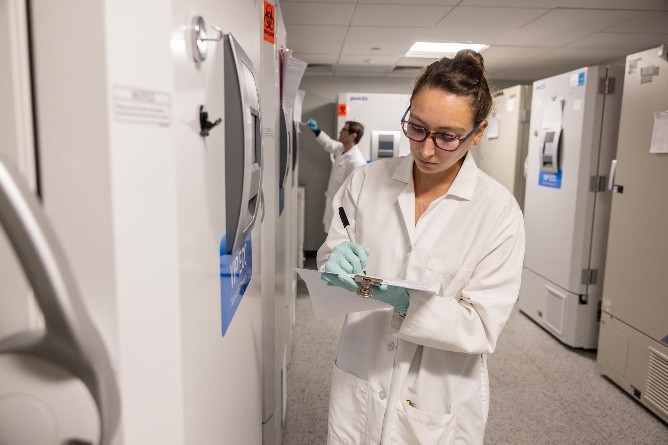
HTORR has facilitated scientific advances in biomedical research across multiple areas, including biochemistry, cell biology, cancer diagnosis and treatments, infectious diseases, immunological diseases, cardiology, endocrinology, ophthalmology, nephrology, toxicology, genetic disorders, and transplantation. Over the years, the resource has continually adapted its services to meet the changing needs of researchers, supporting innovative experiments and providing specialized services that often are not possible using animal models. “As the science has grown, we’ve grown as well,” Dr. Bell reflected. “Researchers come to us with a scientific question, and we design a customized approach to meet their experimental needs.” HTORR delivers human biospecimen services and support—24 hours a day, 7 days a week—to investigators studying every human body system (Figure 3). The resource collaborates closely with researchers to fulfill individual requests. HTORR staff work to control as many parameters as possible across samples, helping ensure the rigor and reproducibility of scientific experiments. The team collects extensive metadata on donor tissues, providing researchers with a comprehensive historical record of the samples that can help inform their studies.
The foundational elements of NDRI and HTORR provide a malleable framework that can be applied to support NIH’s high-priority scientific needs and the emerging experimental methodologies of the research community (Figure 4). This framework has contributed to the advancement of several major NIH initiatives, including the Adult Genotype-Tissue Expression (GTEx) Program, Somatic Mosaicism across Human Tissues (SMaHT) Network, LungMAP, and Developmental Genotype-Tissue Expression (dGTEx) project.
Researchers are using HTORR tissues to develop comprehensive views of human organs, tissues, cells, and body systems. Dr. Bell explained that HTORR provides flexibility to develop new experimental approaches or utilize existing methods that complement parallel studies using other systems, including traditional animal models. “HTORR can pivot to fill different niches, supporting the community in many different ways,” he emphasized. The resource has helped enable many scientific discoveries, including the first treatments for cystic fibrosis, a genetic disease that affects nearly 40,000 children and adults in the United States. HTORR tissues also have helped researchers better understand the persistence of the HIV reservoir across different body systems through an effort funded by the National Institute of Allergy and Infectious Diseases (NIAID). Another project, funded by the National Institute on Deafness and Other Communication Disorders, is working to better understand the connections between the inner ear and sensorineural hearing and balance impairments. On average, HTORR has enabled 100 new scientific publications per year, including many in high-impact journals. NDRI maintains a searchable database of publications.
A new HTORR component, the Pilot Award Program, is helping researchers—including early-stage investigators and established investigators who are transitioning to using human specimens—gather preliminary data for subsequent NIH funding. The program covers all costs associated with obtaining up to 10 human biospecimens for use in a pilot study for an award period of up to 24 months. Awardees also receive essential supporting documents for grant submissions—such as service histories, collection protocols, and letters of support—to develop grant applications to the NIH ICO that supported their award. Participating ICOs include ORIP; NIAID; the National Heart, Lung, and Blood Institute; the National Eye Institute; the National Institute of Diabetes and Digestive and Kidney Diseases; and the National Institute of Arthritis and Musculoskeletal and Skin Diseases. During the first year of launch, this program has seen tremendous interest and has awarded 14 principal investigators with HTORR Pilot Awards to study research areas that are supported by participating ICOs.
Dr. Bell explained that HTORR is built to grow alongside both early-stage and established investigators and will continue to adapt to fulfill long-term needs in science. “We’re not a one-hit wonder,” he remarked. “I think we’re going to see more and more amazing experiments in the future. HTORR supports major public health needs by helping scientists and clinicians directly study human organs, tissues, and cells to learn more about human biology and disease, which in turn provides the opportunity to rapidly accelerate the development of therapeutic strategies against these diseases.”
ORIP supports centers and research resources that provide investigators with specialized tissues and reagents. These critical resources fulfill the research needs of investigators across a wide spectrum of topics in biomedical research. For more information about HTORR and other resources, see ORIP’s Biological Materials and Reagents Fact Sheet.