





Profile of a Veterinary Scientist: Rosemary Bayless, D.V.M., Ph.D., DACVIM
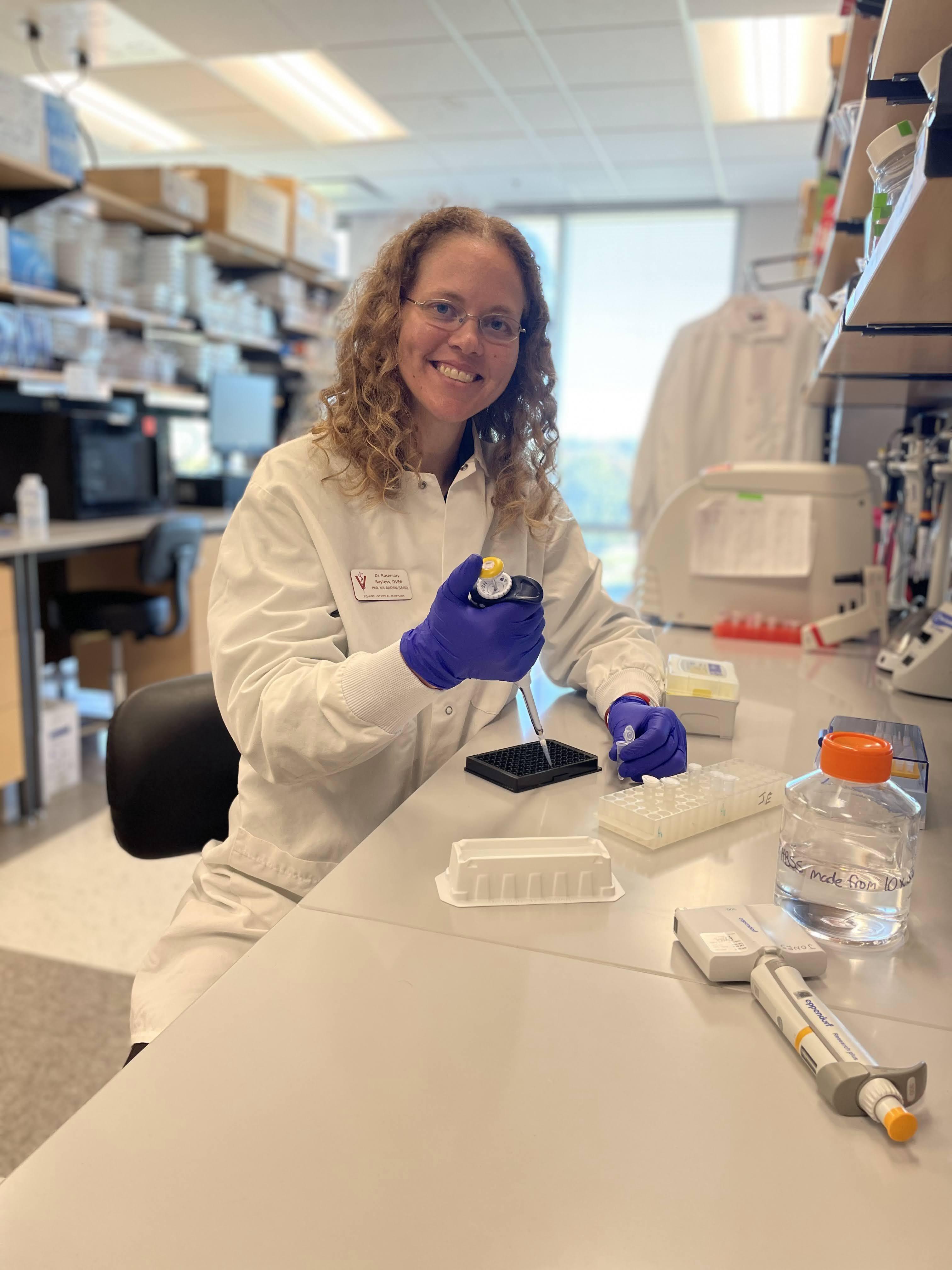
Neutrophils, the most abundant immune cells in circulation, play a critical role in healing wounds and protecting the body from infection. However, neutrophils also mediate many acute disorders and chronic diseases, including pulmonary fibrosis, rheumatoid arthritis, pancreatitis, and steatohepatitis. Dr. Rosemary Bayless, an Assistant Professor at North Carolina State (NC State) University, was awarded an ORIP Special Emphasis Research Career Award (SERCA) K01 (K01OD039838) to develop an independent research program focused on investigating novel treatments for neutrophil-mediated diseases, including neutrophilic asthma (Figure 1). With this funding from ORIP, Dr. Bayless is studying the molecular and cellular mechanisms underlying the anti-inflammatory and therapeutic properties of Withaferin A (WFA), a compound derived from the Ashwagandha plant (Withania somnifera).
After obtaining her Doctor of Veterinary Medicine degree in 2014, Dr. Bayless completed a rigorous internship at a large equine hospital, followed by an equine internal medicine residency and master’s degree program. As part of the combined residency and master’s degree program, she led several research projects to advance diagnostic and therapeutic approaches for veterinary patients, including a new urine biomarker for acute kidney injury;1 a novel immunostimulant (a substance that stimulates the immune system) for melanoma; and a potential strategy to mitigate the disruption of the gut microbiota that occurs with antibiotic use. Through these projects, Dr. Bayless honed key research skills, including study design, statistical analyses, dissemination of scientific findings, and grant writing. She also gained experience in many aspects of organizing and conducting clinical trials, including subject recruitment and organized recordkeeping. This journey helped Dr. Bayless realize that she wanted to pursue a research career in academia, leading her to enroll in the comparative biomedical sciences Ph.D. program at NC State University.
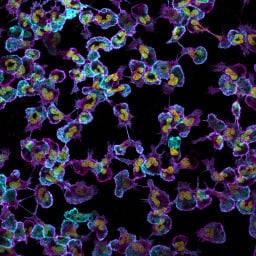
While completing her Ph.D. studies, Dr. Bayless received support from an ORIP-funded T32 Comparative Medicine and Translational Research Training Program (CMTRTP) (T32OD011130). Under the mentorship of veterinary scientist Dr. Samuel Jones, Director, Comparative Biomedical Sciences Program, and through the CMTRTP, her doctoral research focused on studying an innovative treatment for neutrophil-mediated inflammation and evaluating a novel diagnostic and prognostic biomarker in veterinary patients with acute intestinal disease. Her in vitro research showed that WFA directly inhibits key neutrophil functions that can lead to tissue damage and promotes neutrophil apoptosis, a type of noninflammatory cell death, which could accelerate the clearance of immune cells and the resolution of inflammation (Figure 2).2 “During my T32-funded Ph.D. program, I really discovered my passion for basic and translational science. My excitement for mechanistic research really exploded and reshaped the trajectory of my career,” said Dr. Bayless.
These research opportunities sparked Dr. Bayless’ passion for understanding how neutrophils facilitate disease development and progression. “Neutrophils are the focus of my lab. I love neutrophils, wherever they are: across organ systems, across species. I’m very interested in how neutrophils mediate diseases and what we can do to intervene to improve outcome and quality of life for human and veterinary patients.” Her independent research program at NC State University, supported by ORIP’s SERCA K01, includes a strong focus on the role of these immune cells in neutrophilic asthma. Neutrophilic asthma is a subtype associated with more severe clinical symptoms and a reduced response to common therapies, emphasizing the need for novel treatments for this difficult-to-treat condition. Through collaborations with physician–scientists at The University of North Carolina at Chapel Hill (UNC) School of Medicine, Dr. Bayless demonstrated that WFA significantly reduced airway and lung inflammation in a preclinical model for neutrophilic asthma.
To understand how WFA may benefit patients with neutrophilic asthma, Dr. Bayless is using three new approach methodologies (NAMs) to reveal the molecular and cellular mechanisms through which WFA reduces neutrophilic inflammation. She is integrating 3D microphysiological systems (MPS) in her research to elucidate the interactions between neutrophils and the vasculature. Certain signals, such as chemoattractants, guide the recruitment and migration of immune cells to an inflammatory site. Neutrophils follow these signals through the bloodstream and interact with the endothelium, the layer of cells that lines the blood vessels, to move from the vessels into the tissue. By creating a vascular MPS with primary lung endothelial cells and human neutrophils, Dr. Bayless can model the early stages of inflammation. Advanced instrumentation, including live cell confocal microscopy, allows her to study how WFA impacts neutrophil–endothelial cell interactions, such as rolling and adhesion.
Epithelial cells line the airways of the lung. In neutrophilic asthma, chemoattractants recruit neutrophils to the lungs and facilitate their movement across the airway epithelium. Dr. Bayless is using a “2.5D” lung model to study neutrophil migration within the lungs and the resulting local tissue damage. Primary human bronchial epithelial cells are cultured on a permeable membrane under air–liquid interface conditions to promote epithelial cell differentiation. By placing human neutrophils and chemoattractants on opposite sides of the cell monolayer, neutrophil transepithelial migration can be investigated. Dr. Bayless also is leveraging her clinical veterinary expertise and the marked similarities between neutrophilic asthma in human patients and spontaneously occurring neutrophilic asthma in veterinary patients to study key processes in the resolution of airway inflammation. Large numbers of these airway cells can be collected from healthy and asthmatic veterinary patients during a minimally invasive procedure, enabling direct comparisons of multiple different in vitro stimulation and treatment conditions for each sample donor.
Dr. Bayless emphasized that NAMs provide several benefits in research, highlighting their importance as a tool to interrogate specific processes in high-resolution, highly controlled systems. “Another advantage is that NAMs incorporate physiological factors, like shear forces, that affect the cells in the body,” said Dr. Bayless. She is also excited about their utility for personalized medicine. By incorporating patient-derived cells in these models, researchers can study how an individual patient’s disease may respond to a certain therapy.
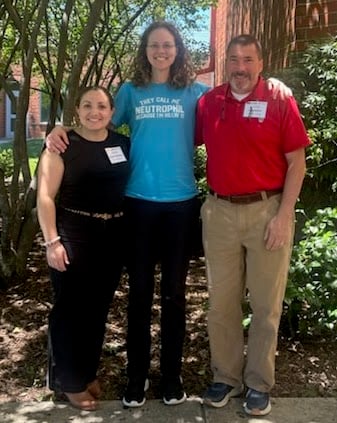
In addition, Dr. Bayless is training the next generation of translational researchers to use NAMs to understand neutrophil-mediated inflammatory diseases. The Bayless research team, including a T32 CMTRTP-funded doctoral student who also is a large animal internal medicine specialist, is examining the role of neutrophils in sepsis, metabolic dysfunction-associated steatohepatitis, and immunothrombosis (Figure 3).
Dr. Bayless emphasized that the NC State University College of Veterinary Medicine provided her with dedicated time to hone her research interests and transition into a tenure-track research position. The college’s commitment to her career development was vital. When she originally submitted a K01 application in February 2023, she did not receive a fundable score, but the reviewer feedback helped strengthen a subsequent application submitted in October 2024. After resubmitting the application in July 2025, Dr. Bayless successfully obtained the K01 award, which was funded by ORIP in July 2026. “It took over 3 years, and I was really fortunate to be in a position where I could keep pursuing that project.”
Dr. Bayless also underscored the importance of collaborations for her successful K01 grant application. In September 2022, she attended a retreat hosted by the Center for Environmental Medicine, Asthma and Lung Biology at UNC, where she met Dr. Timothy Moran, Associate Professor of Pediatrics, UNC, who shared an interest in neutrophilic asthma. Their collaborative studies demonstrated that WFA could be administered safely into the airways in a preclinical model for neutrophilic asthma. Results showed that WFA significantly reduced neutrophils in the airways and decreased gene expression of inflammatory molecules during antigen re-exposure. Dr. Bayless expressed her gratitude for Dr. Moran’s support, noting that he is a co-mentor on her K01 award. She continued that multiple other collaborators and mentors across NC State University and UNC have contributed to her early career successes.
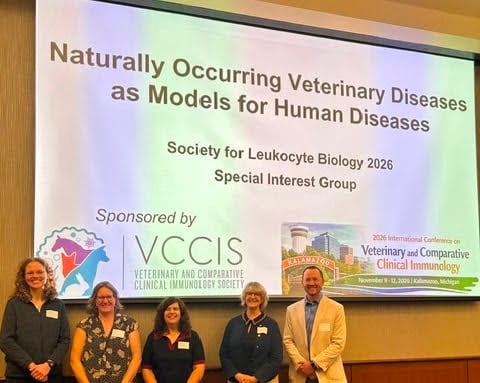
Dr. Bayless highlighted her passion for promoting the importance of veterinary scientists and naturally occurring animal diseases in biomedical science. She explained that veterinarians are uniquely positioned to understand how veterinary diseases can inform the study of human diseases. Veterinary patients can spontaneously develop diseases that affect human patients, including neutrophilic asthma and osteosarcoma, which provides a unique approach for studying pathophysiology and novel therapeutics.3 “The similarities in diseases that affect humans and animals provide valuable opportunities to advance medicine for the benefit of both human and veterinary patients. Comparative medicine approaches can expand the resources needed to reduce disease burden and improve quality of life for veterinary patients,” emphasized Dr. Bayless. She helped organize the Translational Summit on Asthma Across Species event, which was held May 19–20, 2023. This event connected veterinary scientists with physician–scientists who were interested in learning how veterinary patients with asthma could be used to improve the development of therapies for human patients with asthma, and vice versa. In September 2026, Dr. Bayless chaired a veterinary-focused special interest group at the annual Society for Leukocyte Biology meeting to increase awareness of the parallels between veterinary and human diseases, allowing more researchers to understand and leverage spontaneous preclinical models in their studies (Figure 4).
Dr. Bayless’ ORIP-funded research highlights the office’s commitment to supporting training and career development opportunities that align with NIH’s priorities, including NAMs, and promotes the rigor and translational impact of biomedical research. Her specialized background in comparative medicine and inflammatory pathophysiology allows her to leverage spontaneous veterinary models, experimental preclinical models, and NAMs to advance translational research for neutrophil-mediated diseases. “I really appreciate that ORIP values the veterinary clinician–scientist in biomedical research,” said Dr. Bayless. “ORIP views us as scientists and as researchers. They understand the strengths that we bring as veterinarians.”
ORIP supports specific training and career development programs for veterinarians seeking to enter the field of biomedical research. Scientists with veterinary medical expertise contribute to animal, molecular, and genomic studies and translational research that benefit human health. More information on ORIP’s training programs can be found in ORIP’s Training and Career Development Resources fact sheet.
References
1 Bayless RL, Moore AR, Hassel DM, Byer BJ, Landolt GA, Nout-Lomas YS. Equine urinary N-acetyl-B-D-glucosaminidase assay validation and correlation with other markers of kidney injury. J Vet Diagn Invest. 2019;31(5):688–695. doi:10.1177/1040638719867124.
2 Bayless RL, Sheats MK, Jones SL. Withaferin A inhibits neutrophil adhesion, migration, and respiratory burst and promotes timely neutrophil apoptosis. Front Vet Sci. 2022; 17(9):900453. doi:10.3389/fvets.2022.900453.
3 Woodrow JS, Sheats MK, Cooper B, Bayless RL. Asthma: the use of animal models and their translational utility. Cells. 2023;12(7):1091. doi:10.3390/cells12071091.