





A Historic Investment, A Heroic Achievement: How NIH Advanced the ARRA Construction Mission
A Billion-Dollar Opportunity in a Moment of Critical Need
In 2009, the United States was experiencing one of its most severe economic downturns in decades. During this time, the American Recovery and Reinvestment Act (ARRA) was enacted to support governmentwide efforts to stimulate the economy (Figure 1). This massive federal stimulus package was aimed at creating and saving jobs, extending financial relief to the American people, and investing in infrastructure to promote long-term growth.
Among the $10 billion (B) in stimulus provisions allocated to NIH was $1 B earmarked for the construction and renovation of biomedical research facilities. The increased funds were allocated to the National Center for Research Resources (NCRR), the NIH unit that managed most extramural construction programs prior to the Office of Research Infrastructure Programs (ORIP). Combined with a $300 million (M) provision for shared instrumentation, the unprecedented funds more than doubled NCRR’s previous annual budget of $1.2 B. NCRR was granted an enormous responsibility: to distribute these $1.3 B ARRA funds quickly and effectively to create jobs while strengthening the nation’s biomedical research infrastructure.
Dr. Greg Farber, then a Health Scientist Administrator at NCRR, was tasked with managing the ARRA construction program and funds. He successfully coordinated an extraordinary exercise in rapid program development, geographic balance, rigorous review, and sustained oversight. “You don’t get a chance to really improve the ability to do research at this scale very frequently,” he emphasized, reflecting on the unique nature of this opportunity.
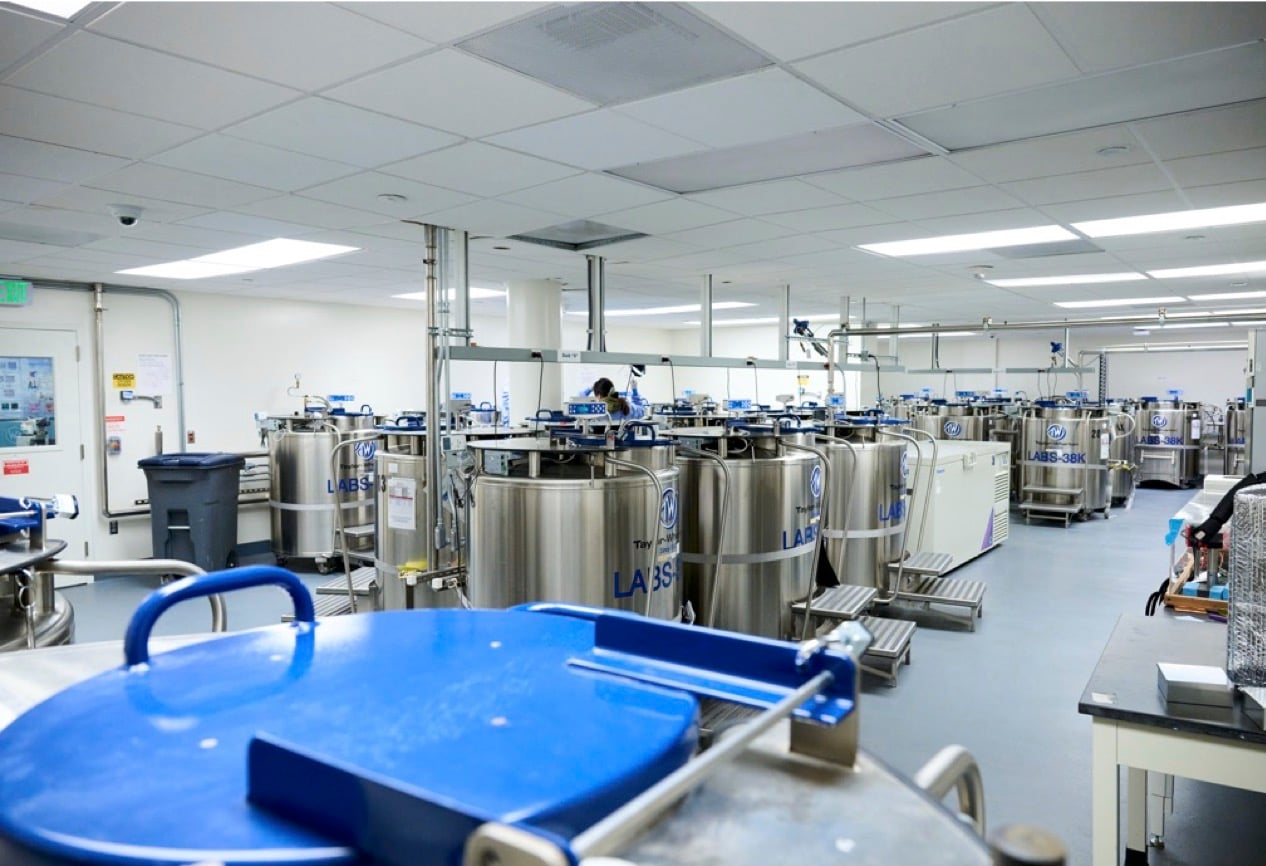
Ultimately, the ARRA funds were awarded for 148 construction projects across the United States, creating jobs and modernizing research facilities (Figure 2). These projects included the construction or renovation of 64 model resource facilities, 56 research laboratories, 17 clinical research facilities or laboratories, 8 imaging facilities, and 7 data centers. More than 15 years later, these projects have made a lasting impact on biomedical research.
Unconventional Strategies for an Unprecedented Challenge
NCRR was dissolved in 2011, shortly after the awards were made. At that time, the responsibility for managing the ARRA program shifted to ORIP’s Division of Construction and Instruments (DCI). Dr. Franziska Grieder, former ORIP Director, reflected on the importance of ensuring ARRA awards were made in alignment with federal interests. “The priority, as for all NIH awards, was to ensure that the funded NIH-ARRA projects would be completed and achieve the greatest impact on science,” she explained. “Additionally, for this set of awards, the requirement to stimulate the economy and create jobs across the nation was a major goal.” This dual mandate—supporting high-quality science while meeting economic recovery goals—was a defining challenge of the ARRA program.
NCRR was responsible for awarding the ARRA funds quickly, distributing grants across the nation to maximize economic and employment impact. Dr. Farber and his team used an innovative approach to fulfill the program’s objectives. They published four distinct program announcements targeting projects of varying scales: large buildings, medium-sized projects, small projects, and core facility repairs. Award sizes reached up to $15 M—far greater than any previous NIH extramural construction grants.
In another extraordinary move for NIH, the team explicitly included geographic distribution as a funding criterion in the program announcements. The team tracked applications by state and essentially created 50 state-level competitions. Dr. Farber noted that while this system was imperfect, the approach helped ensure that the funds were distributed as broadly as possible across the nation. “There were one or two states that didn’t get as much as they should have because they didn’t have enough meritorious applications, and there were one or two states that got more than their fair share,” he recounted. “But with all of that said, the projects really made a significant difference at every institution.”
Reviewing a Tsunami of Applications
The U.S. research community responded quickly to the program announcements, with more than 1,500 applications requesting funds. Universities across the nation had deferred maintenance projects, planned expansions, and modernization needs that had languished for years. For these institutions, the ARRA funding represented a once-in-a-lifetime opportunity to push these projects forward.
This application volume created its own challenge: how to review the many proposals fairly and quickly while maintaining NIH’s high standards for peer review. The solution was to use mail-based evaluations for the first stage of review by independent experts rather than traditional study section meetings. Reviewers from multiple disciplines received the same materials in advance, allowing them to come prepared with independent assessments.
Mr. Steve Breslin, a Senior Architect who participated in the ARRA review process before joining NIH, recounted that this approach enabled focused, high-level discussions among experts from different disciplines and perspectives, leading to a more comprehensive evaluation and more rapid and substantive decision-making. He explained that a key consideration in evaluating these projects was the role of the research facility itself. “The facility is really the largest and most expensive piece of equipment—so I would argue that it’s the most critical piece of equipment,” Mr. Breslin remarked. He emphasized that if a facility does not function properly, the research cannot succeed.
Dr. Sheryl Brining, then Director of NCRR’s Office of Review, led this massive undertaking. She coordinated efforts among multiple scientific review administrators who managed the evaluation of proposals spanning every biomedical research discipline and construction type imaginable. The review team worked at a pace few had experienced, driven by both the economic urgency of the stimulus mission and the recognition that research institutions across the country were counting on these awards.
During this time, skeptics expressed concern that this fast-track approach might compromise review quality, but Dr. Farber recalls compelling evidence of its success: “There were a couple of applications that came from one institution that basically were identical,” he explained. “One was to renovate floors two and three of a building, and the second was to renovate floors four and five of the building. [When the mail reviews came back], we ended up with the same scores for those applications even though they went to different reviewers. So that tells me that the overall process worked, probably as well as normal NIH review.”
The Remarkable Success of Rapid Implementation
Using this approach, the team managed to process the large volume of applications and make awards in 7 to 8 months—remarkably fast by NIH standards. Dr. Farber made personal calls to the recipients of all 148 awards. He reflected that every conversation brought home the real-world impact of the ARRA program. “The recipients responded saying, ‘That is the best news we have heard in a long time,’” he recounted. “‘You don’t have any idea what a difference this is going to make at our institution.’”
The program’s impact extended beyond the initial awards and the direct construction jobs created. ARRA investments addressed immediate research needs while also creating long-term assets, providing institutions with facilities that could support scientific work well into the future. Dr. Farber explained that the federal awards often served as leverage for additional funding. Institutions found that having the “NIH seal of approval” made it easier to raise matching funds from state governments, private donors, and other sources. In many cases, ARRA funded part of a larger renovation: The partial support from ARRA unlocked the entire project’s full potential.
Implementation brought its own challenges, however. With 148 projects launching nearly simultaneously, the monitoring burden was enormous. Conducting technical reviews and site visits in traditional ways was impossible at this scale, so the team developed a paper-based technical review process with required documentation and follow-up calls when questions arose. The funds could not be spent until these technical reviews were complete, ensuring that funded projects had sound construction plans.
Some institutions struggled with the transition from application to execution, Dr. Farber recalled. Local permitting processes, institutional readiness issues, and unexpected construction cost increases created delays. In the end, however, the vast majority of the awarded projects were completed successfully, with all but one of the awarded institutions spending the funds by the fifth year of the award. Dr. Farber noted that for a program of this scale implemented at this speed, that success rate was remarkable.
Advancing Economic Growth
The program’s economic impact was felt immediately in communities across the country. By investing in research infrastructure at institutions nationwide, the program created jobs, accelerated construction activity, and provided critical support to the biomedical research enterprise during a period of economic uncertainty. Mr. Breslin commented that the effort was “win, win, win”—supporting research institutions; enabling scientific discovery; and creating jobs for architects, engineers, and construction workers. By funding projects that were ready to move forward quickly, ARRA helped sustain employment across multiple sectors while advancing critical upgrades to research facilities.
Over time, the economic benefits extended far beyond the initial construction phase. ORIP’s follow-up assessments showed that ARRA-funded facilities contributed to sustained institutional growth and regional economic development. In many cases, these investments also addressed fundamental infrastructure gaps that had limited institutional capacity. By modernizing aging facilities and creating new research space, ARRA allowed institutions to expand programs, attract talent, and support new areas of scientific inquiry. The facilities often enabled institutions to compete more effectively for additional funding, amplifying the return on the initial federal investment.
Dr. Grieder noted that the cumulative impacts of these investments have been substantial: “Each of the many facilities has enabled hundreds of millions of dollars in total research funding, the employment of thousands of new faculty and staff, and many startups and spinoffs,” she stated. She added that ARRA’s overall annual economic impact has been estimated at hundreds of millions of dollars. At the University of Florida, for example, the ARRA funds helped researchers obtain approximately $100 M in NIH funding for national studies. Furthermore, annual economic contributions in the state of Florida have been estimated at more than $770 M in gross output, including 4,518 additional full- and part-time jobs. This example demonstrates how strategic investments in research infrastructure can drive economic activity while strengthening the nation’s capacity for scientific discovery.
Designing for the Future: Flexibility Leads to Longevity
The ARRA construction program strongly emphasized designing research facilities that could meet both immediate and long-term scientific needs. As reviewers evaluated proposals, they looked beyond whether a facility could support a specific project and considered how it would perform over time as research priorities evolved.
To ensure long-term value, reviewers prioritized facilities that could operate safely, efficiently, and reliably while accommodating future modifications. Research is constantly evolving; new technologies emerge, equipment becomes more advanced, and scientific questions shift over time. Facilities that are too narrowly designed face the risk of becoming obsolete, while those built with adaptability in mind can continue supporting new lines of inquiry for decades.
Mr. Breslin underscored the importance of flexibility for long-term sustainability. “Research by its nature is dynamic. Over time, equipment becomes more powerful, new procedures are developed, new protocols are required,” he explained. Mr. Breslin noted that a facility has the potential to last for 50 years or more—likely outlasting the research projects it was originally designed to support. “From a facilities perspective, good and thoughtful design goes a long way in addressing the unknowns … You cannot predict the future, but good design can anticipate and reduce the impact of unknowns in the future.”
By investing in flexible, durable infrastructure, ARRA-funded facilities were positioned to enable immediate research outcomes and serve as long-term assets for their institutions. These spaces continue to provide essential capacity for biomedical research, supporting future discoveries long after the original awards were completed.
Pivoting to Virtual Oversight
Oversight of the ARRA construction portfolio extended well beyond the initial award period. Although NIH closely tracked project milestones through documentation reviews, progress reports, and technical assessments, site visits remained an important tool for understanding the real-world impacts of the investments. Program staff frequently incorporated visits to ARRA-funded facilities into other institutional travel, creating opportunities to observe projects firsthand and speak directly with investigators. According to Dr. Farber, these visits often revealed how much the awards meant to local research communities. “Once buildings were built and I was on site visits or at an institution, I really did hear quite frequently about that new space that was built, and it made quite a difference,” he recounted.
As the large number of ARRA projects progressed through the federal interest period, however, in-person visits became increasingly difficult to sustain. Dr. Grieder recalled that the volume of projects created an avalanche of oversight activities while staff resources remained limited. “Time became a limiting factor,” she explained. “And that’s when we came up with the idea to do virtual site visits.” The video-conferencing format ultimately provided unexpected benefits, allowing more NIH staff and leadership to participate in discussions with award recipients. “I gained insight,” Dr. Grieder reflected. “I think it was good for the grantee to see the interest from the entire ORIP team.”
Looking back, Dr. Farber suggested that even more engagement with awardees would have been valuable. “I think if we could do one thing differently, it would be to actually send more program staff out on site visits,” he said. He remarked that some of the most important lessons about research infrastructure only emerge years after facilities become operational. These visits—both in-person and virtual—offered opportunities to hear directly from investigators about what worked, what did not work, and how the facilities ultimately shaped research at their institutions.
A Lasting Legacy
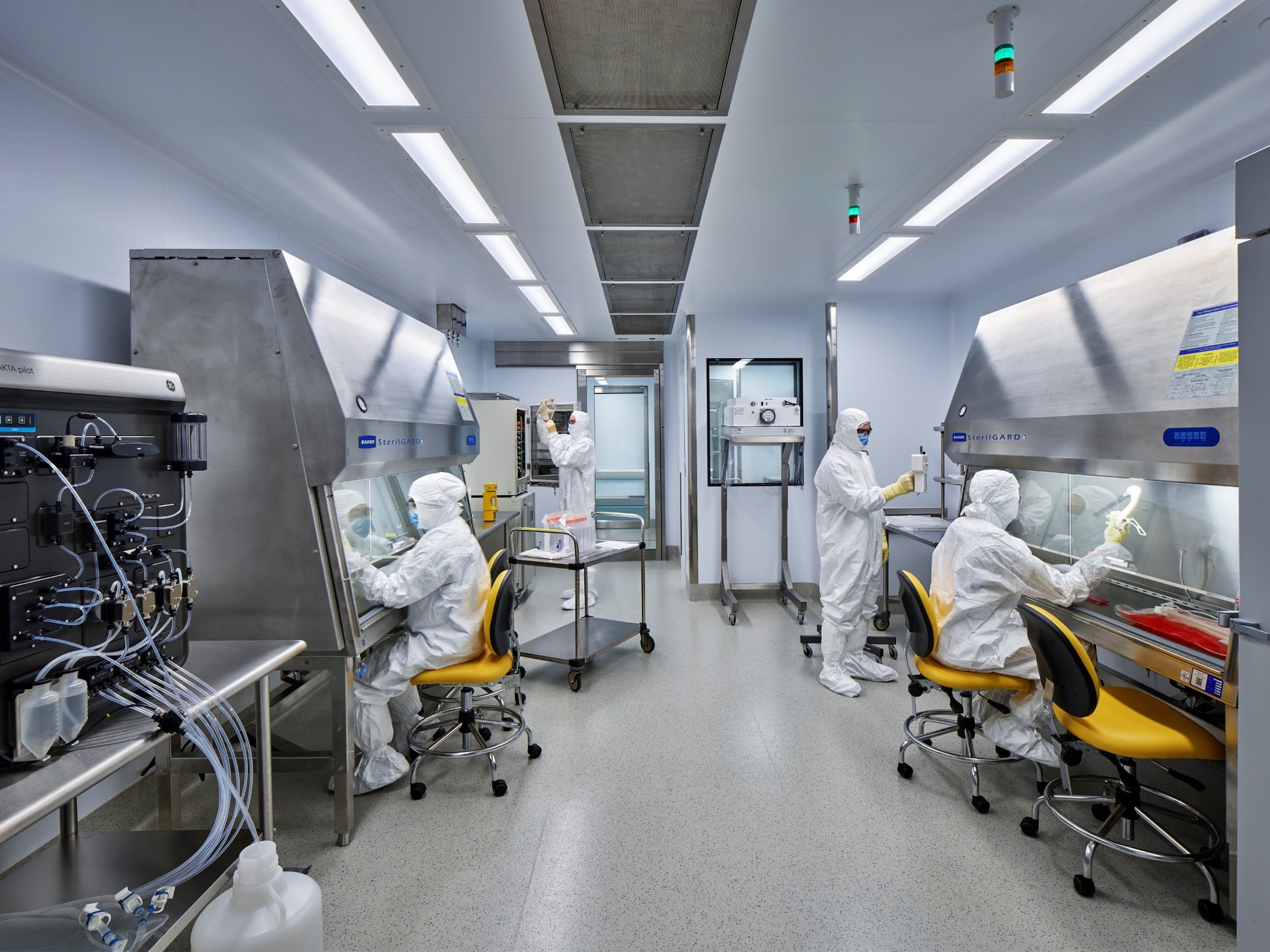 Figure 3. Manufacturing activities inside the aseptic cleanroom of the Clinical Vector Core. Photo courtesy of Dr. Johannes C. M. van der Loo, Children’s Hospital of Philadelphia Research Institute.
The ARRA construction program achieved its dual mission. It distributed $1 B geographically across the United States, creating construction jobs during the depths of the recession. Furthermore, for the long-term, it modernized biomedical research infrastructure at institutions nationwide. A decade later, as the required 10-year federal interest period concluded, recipients continued to express profound appreciation for these projects.
These facilities have helped enable research in a broad array of scientific areas. The Cedars-Sinai Biobank and Translational Research Core Facility has become a major institutional resource, supporting approximately 1,400 researchers and more than 350 research grants each year while helping recruit more than 200 new faculty and staff (Figure 2). The Clinical Vector Core, located within the heart of the Children’s Hospital of Philadelphia Research Institute, provides services to academic, industry, and government groups for the advancement of gene therapy research (Figure 3).
The Olin Neuropsychiatry Research Center, located on the Institute of Living campus at Hartford Hospital, is bridging gaps between clinicians and laboratory researchers, supporting projects on obesity research and other high-priority health topics. The University of Florida’s Institute on Aging has fostered research in many critical areas, including wearable devices for health monitoring and new technologies for measuring bone strength. The Oklahoma Medical Research Foundation (OMRF) (Figure 4) has expanded its integrated clinical, laboratory, and biorepository capacity for research on immunology and autoimmune diseases—such as lupus, Sjögren’s syndrome, and rheumatoid arthritis—which disproportionately affect women and African American, Latino, and American Indian/Alaska Native communities. More examples of ARRA-funded outcomes are highlighted on ORIP’s website.
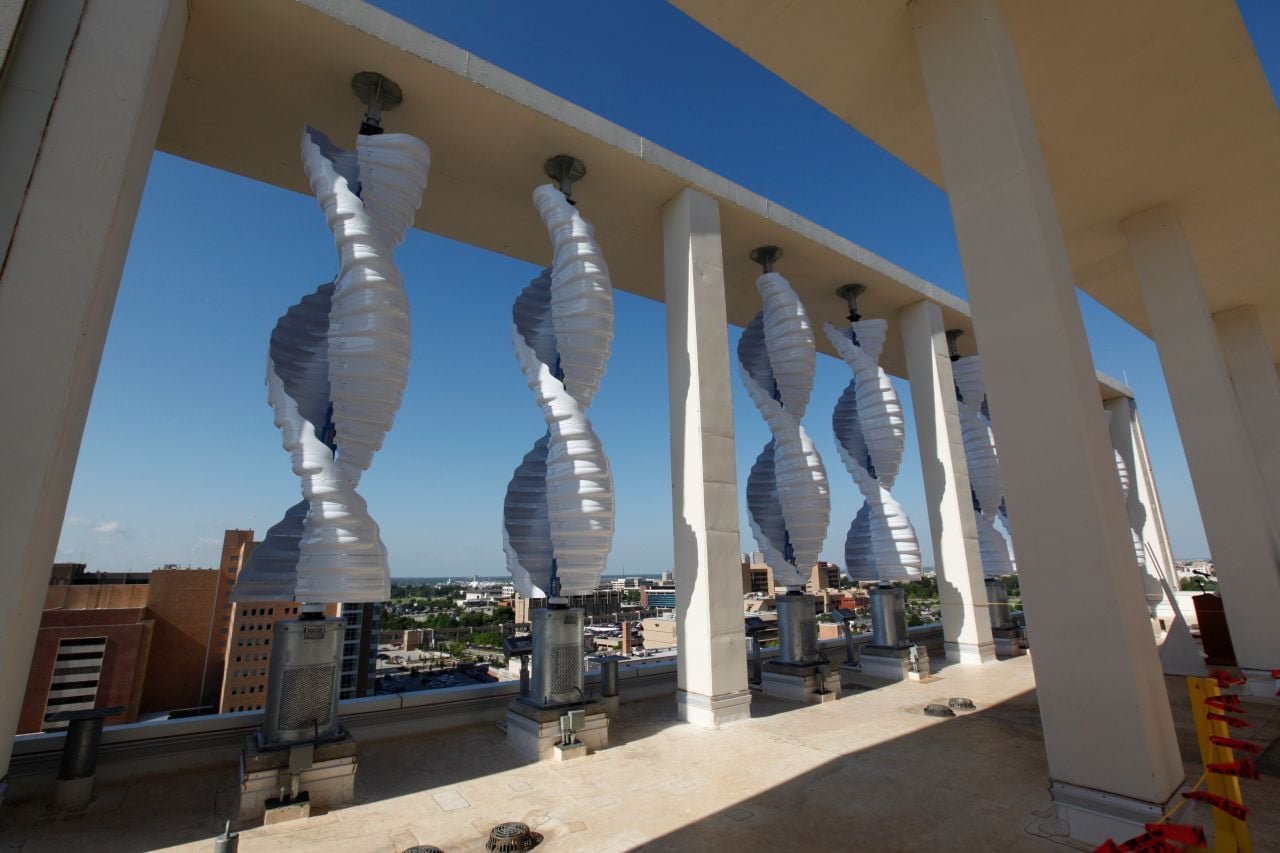 Figure 4. Custom wind turbines power an ARRA-funded facility at the Oklahoma Medical Research Foundation (OMRF). The turbines were designed in the shape of DNA double helices to capture Oklahoma’s famous “wind that comes sweeping down the plains.” Photo courtesy of OMRF.
The program also underscored important lessons about institutional capacity and flexibility. NCRR and ORIP accomplished this formidable task through the tremendous courage and professionalism of their staff members, who managed the demands associated with the program’s newly doubled budget. The program demonstrated that with innovative approaches to peer review, careful program design, and dedicated staff effort, NIH could successfully manage emergency funding at an unprecedented scale.
Looking back, the ARRA construction program represents one of the critical moments when economic necessity, scientific opportunity, and institutional capability aligned. The program’s successful execution required NIH staff dedication, professionalism, competence, improvisation, and creativity but ultimately delivered on its promise. Today, renovated laboratories, modernized core facilities, upgraded model resources, and new research spaces continue to support discovery—a tangible return on a $1 B investment and a testament to what can be achieved when urgency meets expertise and determination. The achievements of the ARRA program will continue to inspire the next generation of the NIH extramural construction team, standing ready to rise to the challenge and deliver exceptional results when another such opportunity arises.
ORIP’s DCI funds programs that support the construction, renovation, and modernization of research space by issuing notices of funding opportunities (NOFOs) when congressional appropriations are available. These programs aim to provide modernized physical infrastructure that meets the evolving engineering needs required to conduct cutting-edge NIH-funded biomedical research. These investments benefit nearly all NIH institutes and centers, advancing research across the full spectrum of biomedical sciences, from fundamental biology to clinical and translational research.