





Aging Healthier and Living Longer: ORIP’s S10 Programs Helped Advance Multiomics Research on Aging
Aging is a complex, natural process and is the single largest risk factor for nearly all chronic diseases. Beyond observing more wrinkles and grey hairs, or checking bone density and elevated low-density lipoprotein, are there more reliable, comprehensive, and systematic measurements to detect normal aging from diseased aging? Thanks to breakthrough multiomics technologies—and critical support from NIH ORIP’s Shared Instrumentation Programs—researchers are transforming how we understand aging and aging-related diseases and combat aging-related diseases. These advances are bringing us closer to a future where people live longer, healthier lives.
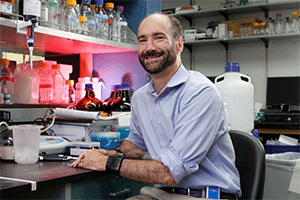
Multiomics analysis integrates data from multiple molecular layers—such as genomics, proteomics, transcriptomics, metabolomics, epigenomics, and the microbiome—to create a comprehensive profile of human health. Unlike traditional single-marker approaches, multiomics captures the full complexity of biological systems, revealing disease mechanisms, biomarkers, and therapeutic targets that would otherwise remain hidden. “Multiomics gives us a molecular trajectory of what’s happening in the body over time, not just a single snapshot,” explained Dr. Michael Snyder, Stanford W. Ascherman Professor of Genetics at Stanford University (Figure 1). “This technology is revolutionizing how we diagnose disease; develop treatments; and most importantly, prevent illness before it starts.”
The success of multiomics research depends on access to advanced instrumentation, such as high-throughput DNA/RNA sequencers, mass spectrometers, and high-performance computing clusters. ORIP’s S10 programs have been instrumental in expanding access to these powerful technologies, enabling researchers nationwide to make discoveries that improve human health. Using an Illumina HiSeq 2500 high-throughput DNA sequencer funded by an ORIP S10 grant (S10OD020141), Dr. Snyder’s team made a groundbreaking discovery: Aging does not happen gradually; it occurs in distinct bursts at specific life stages.
The team conducted a comprehensive, 12-year multiomics study of 108 participants 25 to 75 years of age.1, 2 Their analysis—which included RNA, protein, metabolite, lipid, and microbiome data from blood, stool, skin swab, oral swab, and nasal swab samples—revealed that molecular aging accelerates dramatically around 44 years of age, and again at 60 years of age. “We found that aging happens in bursts,” Dr. Snyder explained. “In your 40s, you see accelerated changes in cardiovascular health, lipid metabolism, and alcohol processing. In your 60s, immune regulation, carbohydrate metabolism, and kidney function shift significantly.”
The multiomics analysis revealed not just when aging occurs, but also how the aging process differs among individuals. Dr. Snyder’s team discovered distinct “aging types.”1 Some people show signs of early cardiovascular decline, while others display immune or metabolic aging patterns. The study also revealed how lifestyle choices can shape the path of biological aging. People who exercised or lost weight through diet improved their metabolic profiles. These findings suggest that molecular aging is not inevitable and that interventions at key stages can make a difference.
This discovery fundamentally changes preventive medicine, as prevention strategies must be personalized to each individual’s aging type. Instead of waiting for symptoms, clinicians can now intervene at critical life stages when molecular changes begin, tailoring interventions to each person’s aging type. For example, detecting lipid metabolism shifts in a patient’s early 40s could prompt earlier cardiovascular interventions, such as statin use, potentially preventing heart disease decades later. Similarly, monitoring immune function changes in a patient’s 60s could help prevent infections and autoimmune conditions.
These findings demonstrate that aging-related disease risks and biological functions change non‑linearly throughout the human lifespan, providing valuable insights into underlying molecular pathways. “It’s like having a biological early warning system,” Dr. Snyder emphasized. He reflected on the importance of ORIP’s support for infrastructure to enable research on this critical topic. “This discovery on aging’s hidden timeline, a paradigm shift, was only possible because of the ORIP-funded, high-quality sequencing instrumentation we had access to,” he stated.
Beyond the aging process, multiomics also is applicable to understanding differences in the ways that groups of people respond to various chronic diseases, such as diabetes. Building on their insights gained in the first study, Dr. Snyder’s team used genome sequencing—made possible with another ORIP-funded S10 grant (S10OD030219)—to elucidate the mechanisms underlying type 2 diabetes. “Diabetes is incredibly heterogeneous,” Dr. Snyder explained. “Using -omics and physiological data, we can predict which foods spike glucose in certain people and tailor diets accordingly.”
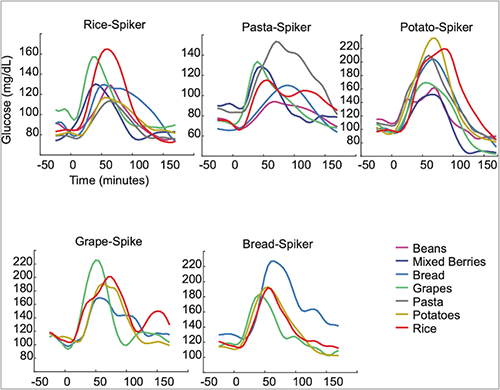
The team published a study in Nature Medicine revealing that people respond differently to various carbohydrate-rich foods at the molecular level3 (Figure 2). Using continuous glucose monitoring and multiomics profiling, they identified why consuming rice leads to dramatic spikes in blood sugar in some individuals (often those with insulin resistance) but not others. The study participants also differed in their responses to other carbohydrate-rich foods, including potatoes, bread, pasta, beans, grapes, and mixed berries. The team gathered comprehensive information linking individualized blood glucose patterns and metabolic phenotypes with type 2 diabetes and cardiovascular disease risk. This precision nutrition approach could help reverse the diabetes epidemic affecting more than 38 million Americans—consequently reducing complications, health care costs, and premature deaths.
Dr. Snyder underscored the importance of multiomics profiling for generating a comprehensive view of a person’s health over time. “Sequencing has permeated many scientific areas, but it’s especially powerful for longitudinal studies like ours,” he explained. “Having the right tools lets us generate data at a level that wasn’t possible 10 years ago.” Over time, the team plans to expand this approach to explore how aging manifests across sex and various other health conditions. “Thanks to ORIP’s S10 funding mechanism, we’ve been able to generate the kind of deep, continuous data needed to understand aging, as it truly is a complex, nonlinear, and deeply individualized process,” Dr. Snyder remarked. “This discovery changes how we study aging and aging related-diseases and how we prepare for it.”
The potential of multiomics profiling extends to many other areas of health research, such as women’s health, cancer, and neurodegenerative diseases. For example, multiomics profiling could identify early biomarkers of aging in ovaries—the fastest-aging organ in the body—enabling interventions to extend reproductive lifespan and prevent associated cardiovascular, bone, and cognitive complications in women. Multiomics techniques can also detect molecular signatures years before tumors become clinically detectable by integrating circulating tumor DNA, protein biomarkers, metabolic profiles, and immune signatures. This approach enables true cancer prevention rather than just early detection. Furthermore, by combining brain imaging, cerebrospinal fluid proteomics, blood-based biomarkers, and genetic profiling, researchers can use multiomics approaches to identify individuals who are at risk of developing neurodegenerative diseases decades before symptoms appear. Alzheimer’s disease, the most common neurodegenerative disorder, is estimated to affect more than 6 million Americans. Multiomics studies can open critical windows for preventive interventions while the brain remains healthy enough to respond.
The next technological frontier involves spatial -omics and single-cell resolution technologies that analyze biological molecules in their native tissue context, revealing how different cell types within organs age differently and how cellular communication breaks down in disease. Beyond laboratory profiling, integrating multiomics with wearable sensors that monitor activity and sleep, electronic health records capturing clinical outcomes, environmental exposure data, and lifestyle information creates comprehensive health models. Dr. Snyder highlighted the importance of these efforts to tailor treatments to patients, helping prevent diseases before they occur. “We’re entering a world where wearables, genome sequencing, artificial intelligence, and multiomics can work together to guide truly personalized prevention,” he stated. “Instead of treating disease after it develops, we’ll prevent it before it starts. Instead of generic health advice, we’ll have precise recommendations tailored to each person’s molecular profile.”
The ultimate promise of multiomics technologies aligns perfectly with NIH’s mission to improve the health of all Americans. Multiomics technologies are already revealing when and how aging accelerates, which individuals face the highest disease risks, and what interventions work best for whom. As these technologies advance toward spatial -omics, single-cell resolution, and integration with real-world health data, the possibilities expand exponentially. These integrated approaches, powered by artificial intelligence, will predict individual disease risks with unprecedented accuracy, identify optimal timing for interventions, and generate personalized recommendations tailored to each person’s unique molecular profile, environmental exposures, and life circumstances.
With the right tools at the right time, researchers can catalyze paradigm-shifting discoveries. Dr. Snyder’s work is helping build the foundation for a future in which people understand their unique health trajectories, receive personalized prevention strategies, and maintain their health spans—bringing precision prevention and maximizing years lived disease-free with excellent quality of life. His team’s recent S10-supported studies have generated important insights on the nonlinear nature of aging, the heterogeneity of diabetes, and the individuality of disease risk. The journey from molecular discovery to improved health outcomes requires sustained commitment. Thus, continued support for research infrastructure, data science capabilities, and collaborative networks will be crucial for translating these foundational efforts into clinical practice, accessible diagnostics, and effective interventions.
ORIP’s S10 programs support purchases of state-of-the-art, commercially available instruments to enhance research by NIH-funded investigators. S10 awards are made to domestic public and private institutions of higher education, as well as nonprofit domestic institutions, such as hospitals, health professional schools, and research organizations. Every instrument awarded by an S10 grant is to be used on a shared basis, which makes the programs cost efficient and beneficial to thousands of investigators at hundreds of institutions nationwide. For more information, please visit ORIP’s S10 Shared Instrumentation Programs webpages.
References
1 Ahadi S, Zhou W, Schüssler-Fiorenza Rose SM, et al. Personal aging markers and ageotypes revealed by deep longitudinal profiling. Nature Medicine. 2020;26(1):83–90. doi:10.1038/s41591-019-0719-5.
2 Shen X, Wang C, Zhou X, et al. Nonlinear dynamics of multi-omics profiles during human aging. Nature Aging. 2024;4(11):1619–1634. doi:10.1038/s43587-024-00692-2.
3 Wu Y, Ehlert B, Metwally AA, et al. Individual variations in glycemic responses to carbohydrates and underlying metabolic physiology. Nature Medicine. 2025;31(7):2232–2243. doi:10.1038/s41591-025-03719-2.